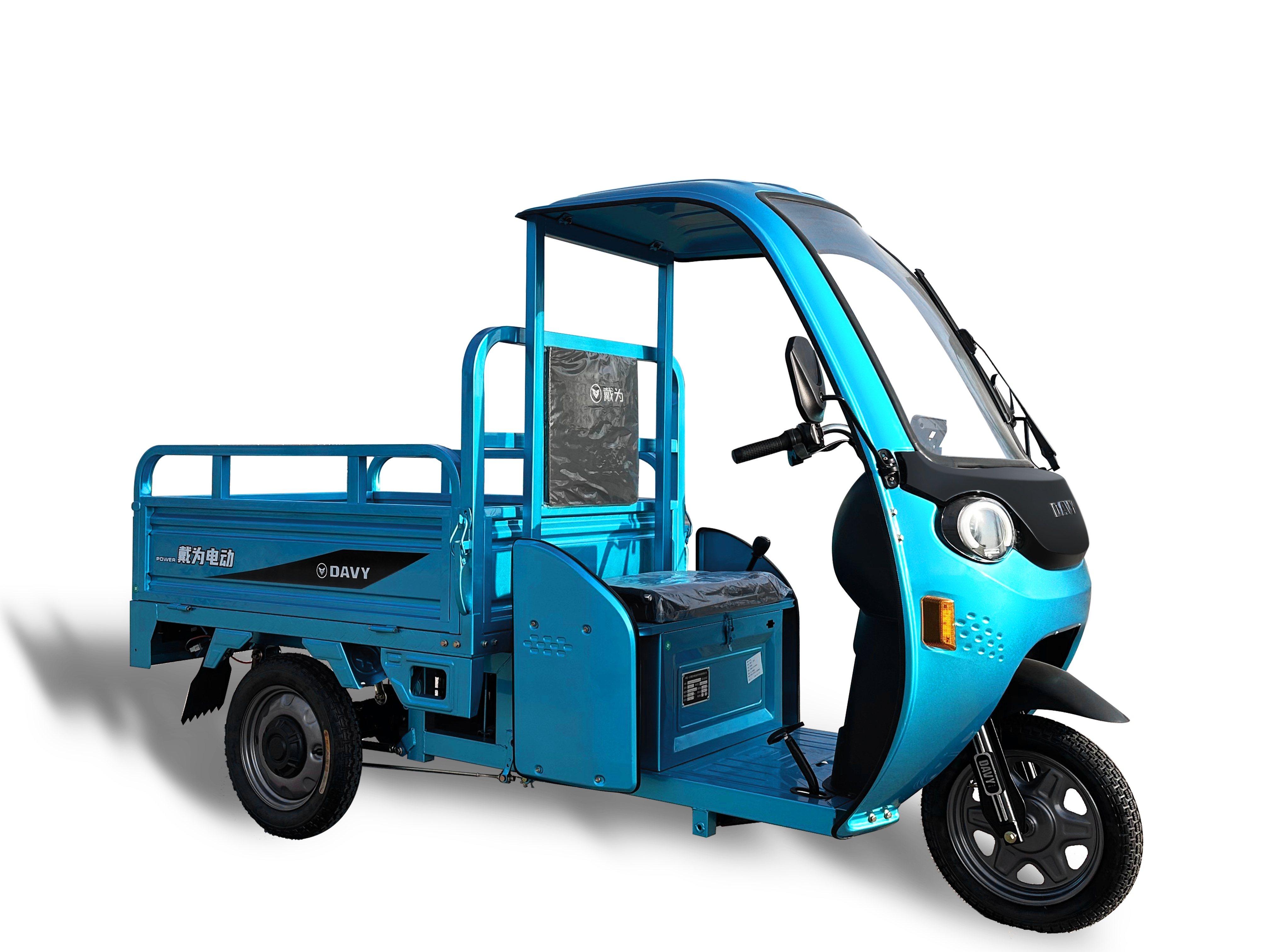
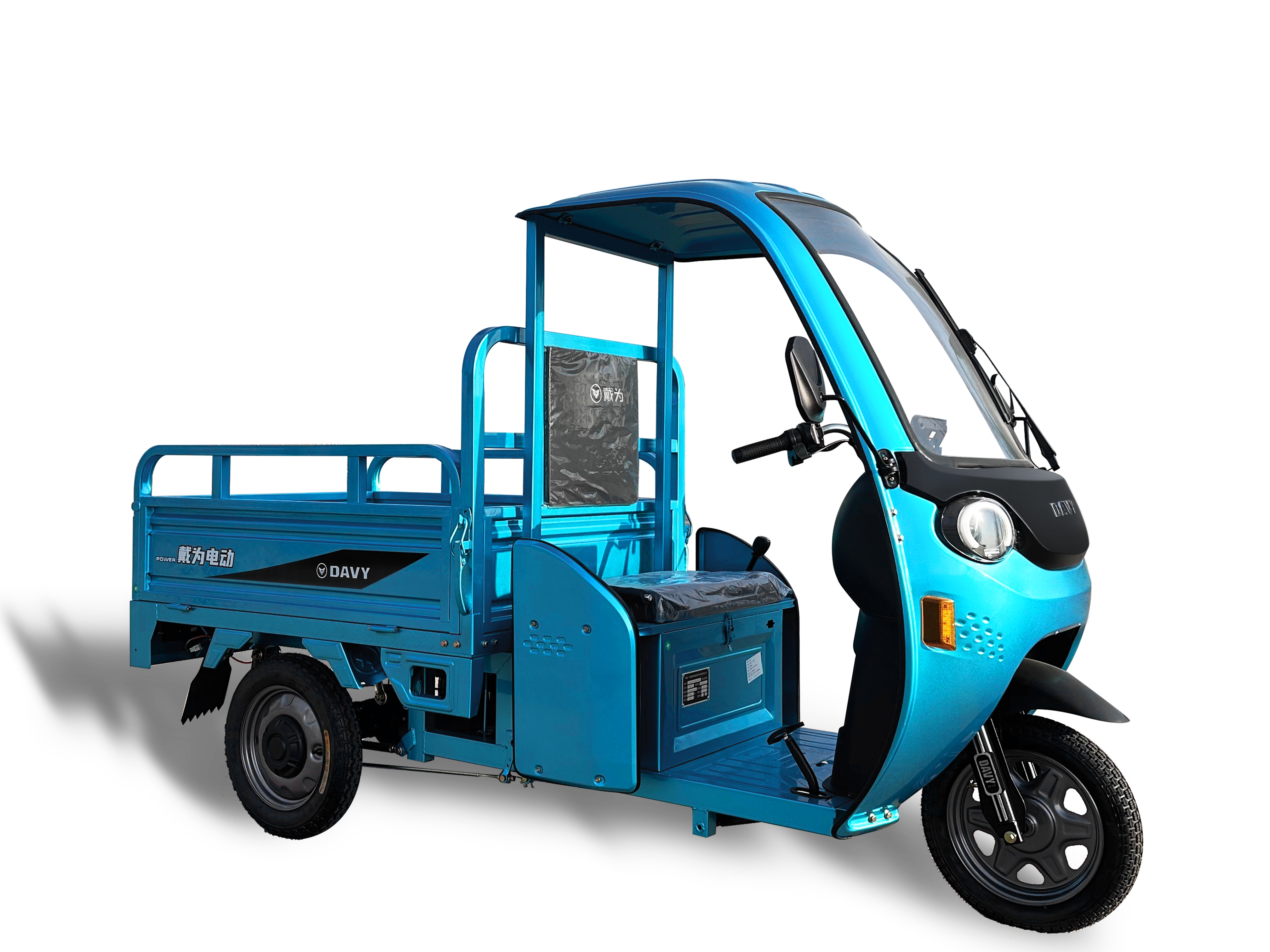
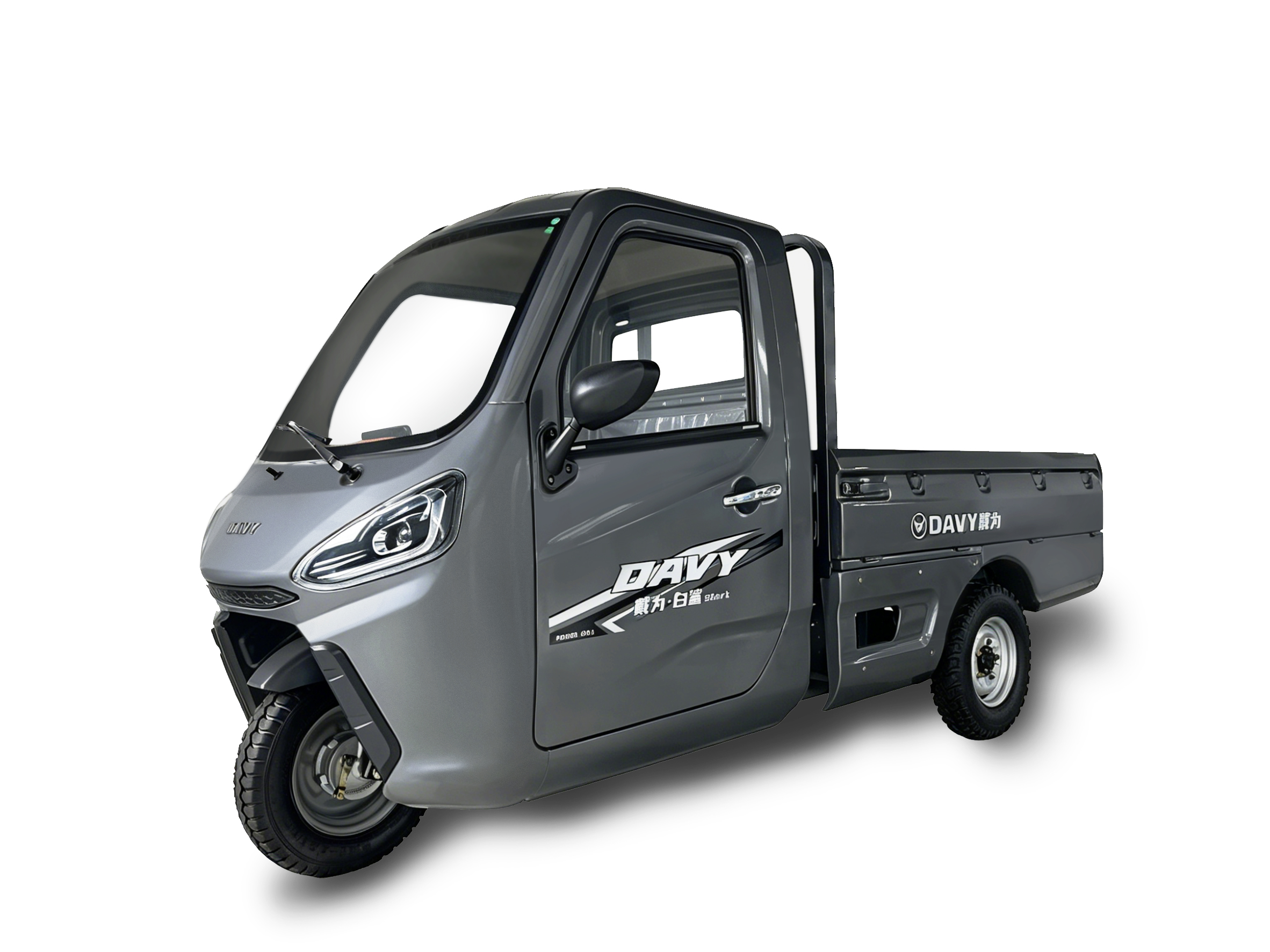
The Four Major Manufacturing Processes of Electric Tricycles
Jiangsu DAVY New Energy Auto Motive Electric tricycle Factory
Although electric tricycles are catehttps://www.davyauto.com/product/white-shark-series/heavy-duty-electric-tricycle-for-utility-transport-and-delivery-db-119-p/https://www.davyauto.com/product/white-shark-series/heavy-duty-electric-tricycle-for-utility-transport-and-delivery-db-119-p/gorized as micro-vehicles, they serve as highly maneuverable and modern solutions for both commuting and freight. Their core manufacturing workflow is highly similar to that of the automotive industry, strictly following the four core stages of modern vehicle manufacturing: Stamping, Welding, Painting, and Assembly. Only factories fully equipped with these four major production processes can truly guarantee product quality.
1. Stamping Process
Purpose: Stamping is the very first step in vehicle manufacturing. Utilizing large-scale stamping presses and proprietary molds, metal sheets (typically high-strength steel plates) undergo cutting, punching, drawing, and bending to be processed into various vehicle body components.
Key Role in E-Tricycles:The chassis structural components, fully enclosed cargo box panels, and the highly technical integrated cabin (such as the seamless, non-detachable cabin roof and side panels) are all formed in a single operation through the stamping process. Stamping with independent, dedicated molds ensures precise dimensions, sleek lines, a stylish appearance, and seamless surfaces for every component.
2. Welding Process
Purpose: Welding is the process of securely joining countless stamped metal parts together—much like building blocks—using robotic arms, spot welders, and CO2 shielded arc welding (MIG welding). This forms the vehicle's structural skeleton (chassis frame) and body (cabin and cargo box).
Key Role in E-Tricycles:Welding directly determines the safety and durability of the vehicle, which is especially critical for heavy-duty electric cargo tricycles. Top-tier industry craftsmanship constructs the cabin into a "one-piece, fully integrated, and non-detachable structure." Compared to the crude splicing of separate metal sheets found in smaller workshops, fully automated seamless welding not only provides a significantly rigid vehicle body but also lays a solid foundation for superior electrical insulation and high airtightness.
3. Painting & Coating Process
Purpose: To put it simply, painting is like "dressing the vehicle body." After welding, the bare metal shell enters a fully automated coating line, where it undergoes pre-treatment (degreasing and rust removal), cathodic electrophoresis, primer coating, topcoat spraying, and high-temperature baking.
Key Role in E-Tricycles:
Anti-Corrosion & Longevity: Electrophoresis technology allows the paint to penetrate deep into the interior of metal tubes and hidden welding corners, forming a robust protective film. This ensures that even under rainy, humid, or harsh environments, the electric tricycles remain rust-free for years, ensuring an extended product lifespan.
Stylish Aesthetics: The premium baked paint finish not only delivers high surface hardness and excellent scratch resistance but also presents a vibrant, high-end texture. This completely transforms the tricycle from a cheap utility vehicle into a highly fashionable product.
4. Final Assembly Process
Purpose: Final assembly is the concluding stage of the entire production flow—the process that turns a painted shell into a "living vehicle." On the final assembly line, workers and machinery precisely install the powertrain (motor, rear axle, controller), battery pack, electrical wiring harness, suspension system, wheels, interior seating, and glass windows onto the coated body.
Key Role in E-Tricycles:The final assembly process reflects the factory's management standards and quality control capabilities. Since various configurations are available—such as matching a specific cabin model with a fully enclosed cargo box—the assembly line must possess exceptional flexible customization capabilities. Furthermore, upon completion of assembly, every vehicle must pass rigorous quality inspections, including waterproof testing (rain shower booth to verify sealing performance), electrical circuit testing, and road tests. Only after passing all tests will the vehicles be securely packed and readied for shipment.